As a participant in the Japanese government scholarship program (MEXT), I had the privilege of taking part in an internship at Denka Co., Ltd., situated within the Omni Plant in Niigata Prefecture. Denka Co., Ltd. is a prominent chemical manufacturer in Japan, engaged in diverse global ventures across various sectors. At the Omni Plant in Niigata Prefecture, Denka Co., Ltd. has established a cement factory and ventured significantly into the cement industry, utilizing the ample limestone resources sourced from Mount Kurohime, which is adjacent to the plant. Over time, the Omni Plant has evolved into the largest cement production facility along the Sea of Japan, driven by continuous advancements in both equipment and technology.
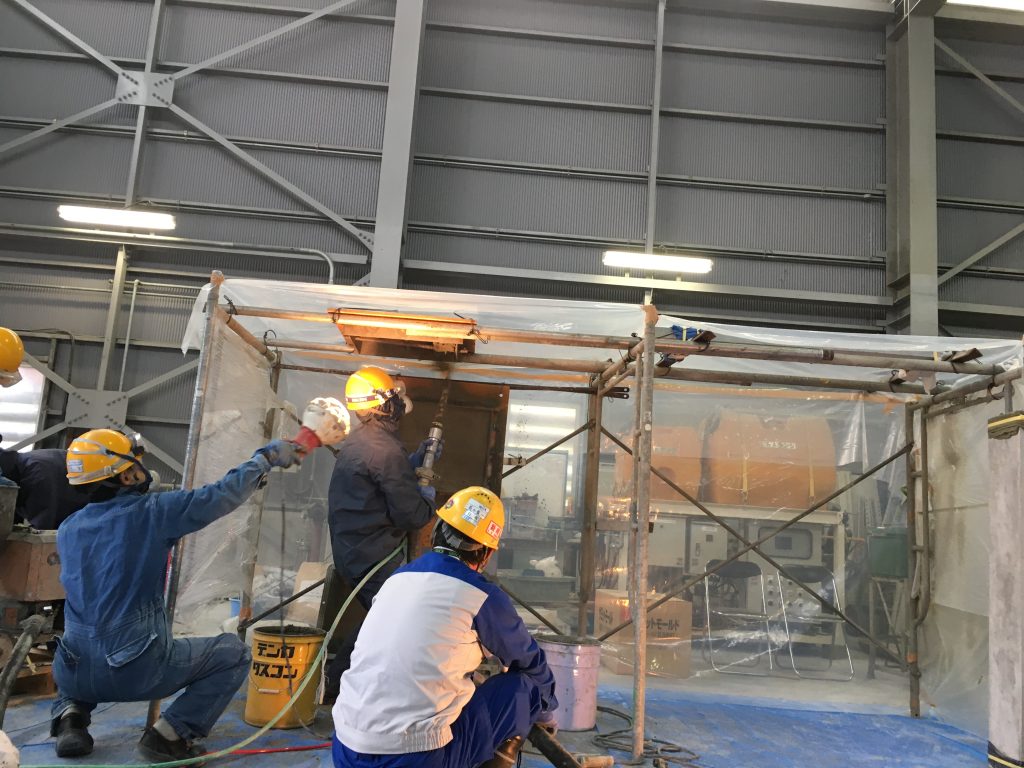
During the internship, which took place in January 2016, I was assigned to the Research Department of Cement and Special Cement Additive. This department’s responsibilities encompass not only quality control of cement production but also the development of high-performance and easily workable cement-based materials. As is well-known, the application of cement-based materials presents numerous challenges in real-world construction scenarios. Denka Co., Ltd. offers various products that can be incorporated into cement-based materials either before or during the mixing process. The utilization of these admixtures brings forth several advantages contingent on their specific types. For example, products like NATMIC, SC-1, and ES have the capability to modify the setting and hardening properties of cement paste by influencing the rate of cement hydration. This proves invaluable for applications like shotcreting underground structure walls that require rapid cement paste hardening. Denka Co., Ltd. graciously invited me to observe a demonstration of these product types. During the demonstration, a simulated underground structure wall construction was carried out. The initial step involved preparing steel reinforcements on the framework for stabilization during the shotcrete application. Subsequently, cement paste was pneumatically sprayed onto the work surface. Through the use of cement additive materials manufactured by Denka Cement, the setting and hardening times of the cement paste were reduced, ensuring that the paste adhered successfully to the wall without falling to the ground. Other products, namely SIGMA and SUQCEM, can be added to concrete mixtures to create high-strength concrete by minimizing water content. In prestressed concrete structures, prestress forces are applied early in the process. To achieve this, SUPER CEMENT can develop ultra-high early concrete strength. Additionally, Denka Co., Ltd. produces expansive additive materials to induce chemical prestress forces on concrete materials, counteracting the undesirable effects caused by concrete shrinkage.
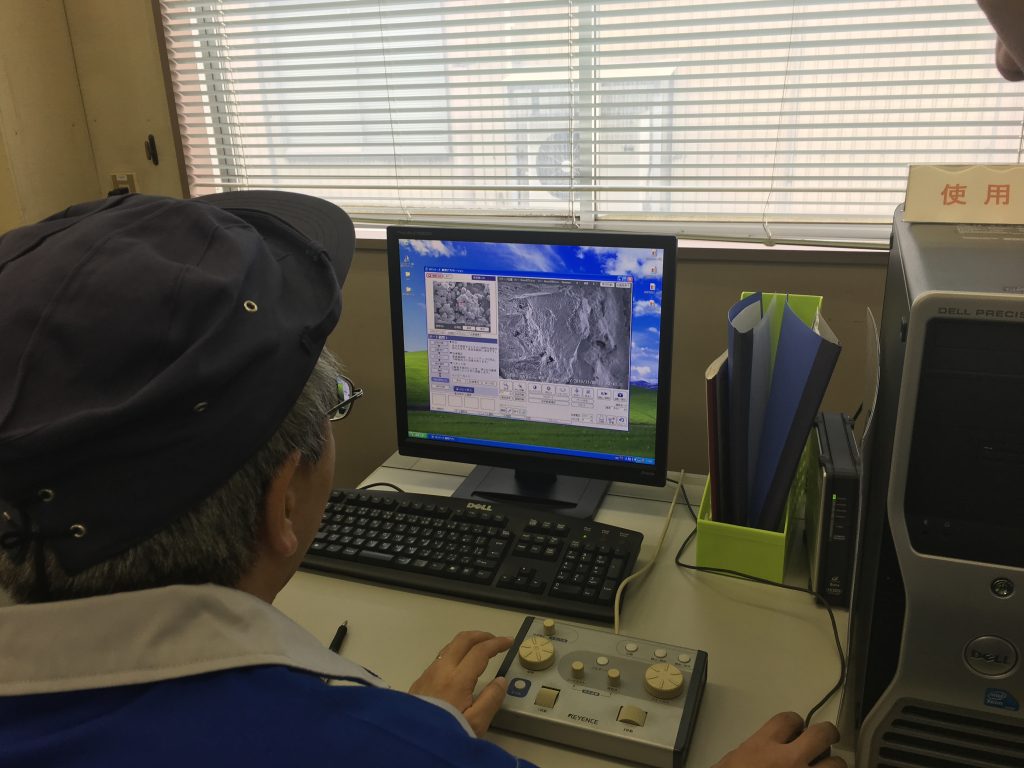
The Research Department of Cement and Special Cement Additive is highly encouraged to pursue further innovations in cement-based material technology. In support of this goal, the laboratory is equipped with an array of machines to comprehensively investigate material properties. On a macrostructural scale, material strength tests, including compressive, tensile, and bending tests, are conducted using a Universal Testing Machine (UTM). At the microstructural level, several machines, such as the mercury intrusion porosimetry machine, X-ray powder diffraction (XRD) machine, and electron microscope, are available for analysis. The laboratory scientists provided detailed explanations of each machine’s functions, and I had the opportunity to learn how to operate some of them. The mercury intrusion porosimetry machine is employed to quantitatively examine the porous structure of solid samples. By analyzing pore size distribution in hydrated cement paste, it becomes possible to predict the strength and durability of cement-based materials. The XRD machine is used for identifying the chemical composition of materials, a crucial factor influencing material characteristics. The electron microscope, closely tied to the microstructure’s definition, offers the ability to scrutinize materials’ microstructures at a resolution of less than one micrometer. Understanding the microstructure and properties of individual cement-based material components and their interrelationships facilitates better control over real-world structural behavior.
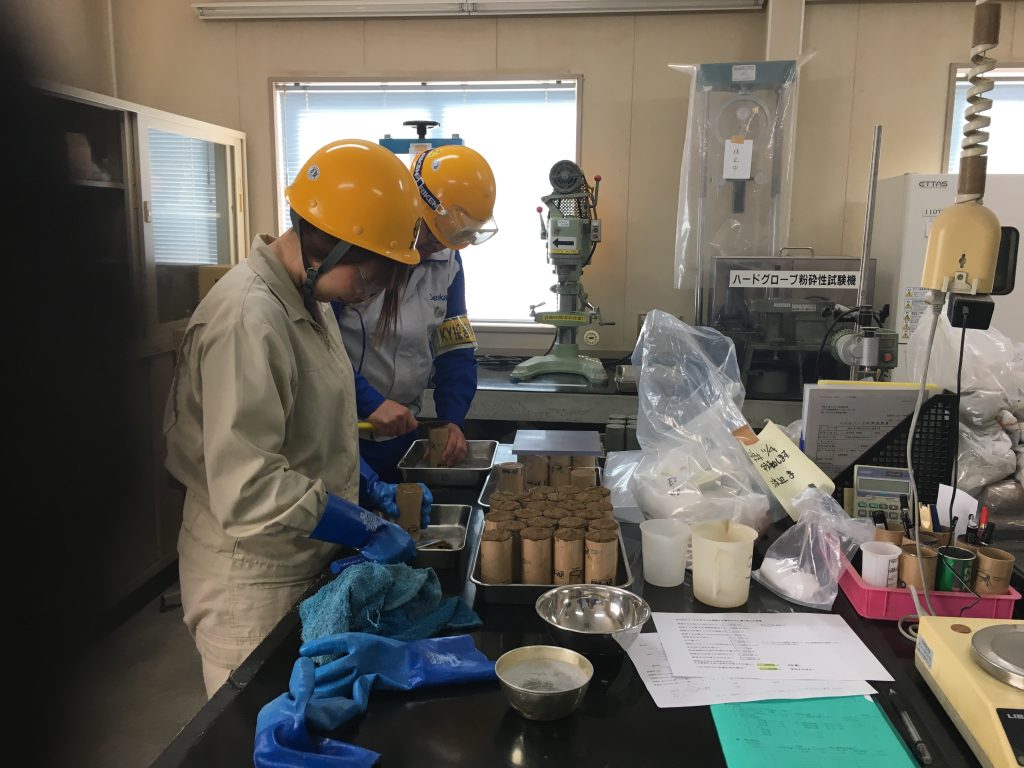
During my tenure as a temporary staff member at Denka Co., Ltd., I was also encouraged to actively engage in their ongoing projects. I became a member of one of the working groups within the Research Department of Cement and Special Cement Additive, specifically the Soil Reforming Group. This group is tasked with researching soil improvement through the use of cement and cement additives, with a particular focus on cement-treated soil. Cement-treated soil is a material in which a relatively small proportion of cement is added. Due to economic considerations, this material is widely utilized as the foundational layer in numerous infrastructure construction projects. I closely followed the entire process, from determining the composition to mixing and testing cement-treated soil.
The internship program provided me with a wealth of experience and knowledge in the field of cement and cement additives, which will undoubtedly benefit my future career. Despite language barriers, I was able to establish meaningful connections within the company and found the employees at Denka Co., Ltd. to be incredibly friendly and supportive. Their encouragement and mentorship greatly contributed to my learning experience during the internship program. The beachside party organized by the company’s employees will remain an unforgettable memory. Finally, I would like to express my gratitude to everyone who contributed to the success of this internship program.




Hi, this is a comment.
To get started with moderating, editing, and deleting comments, please visit the Comments screen in the dashboard.
Commenter avatars come from Gravatar.